 Graphic Novel, 【332 pages】45.6MB (download)
The theme is given by the subtitle: an epic search for Truth. Some people seek Truth in Jesus, some in Buddha, but Bertrand Russell, the main character of the story, tried to find Truth in Math. Now doing math logically and living your life logically are two different things. Mathematicians keep mixing them up, showing their funny side.
Funny or not, after flipping through, if you get the impression that math people are mad, you're not far off. As the saying goes, "There's just a fine line between creativity and insanity." It all depends on where you define the line.
If you can follow what the authors explain, you'll keep turning the pages. If you can't, you can keep skipping the pages -- just go with the flow of ideas.
Russell and his tutor Whitehead tried to put this dream into practice, by hand. Spending decades, they managed to prove some basic theorems, e.g. 1 + 1 = 2 after some 300 pages! (see page 184 of the comic book.)
Nowadays, a theorem-prover (like HOL) certainly "knows" 1 + 1 = 2 (for other discussions, see 【4】【5】). This is because someone repeated Russell's effort in building the theorem-prover. A 300-pages long logical chain is executed by the modern ultra-fast CPU in less than the blink of an eye.
Viewed in this light, Russell's search had not been in vain -- he just didn't have a theorem-prover at the turn of century.
Confused? The explanation starts on page one: how this graphic novel about logic comes to be.
How accurate is the story, historically? That's explained in the Notes at the end. It's mostly historically accurate, with minor twists only to keep a coherent story.
If you find it hard to follow the logic and philosophical arguments, that's OK. You don't need to know math or logic to appreciate this best-seller【1】(there is even a Chinese translation 【3】).
Oh yes, there is an adorable dog called Manga, Greek slang for “cool dude,” not a reference to Japanese comics (see page 25 of the comic book).
Can you imagine how much effort a team of people must work tirelessly to produce such a marvelous work of art?
It took them 5 years!【6】【7】【8】 It's ironic that the whole production is computed on logic machines, some Apple MacBooks. The result, of course, depends on human ingenuity. For the book reviews, take a look at these various "official" websites at【2】.

Talks about Logicomix, the innovative, dramatic graphic novel by Apostolos Doxiadis.
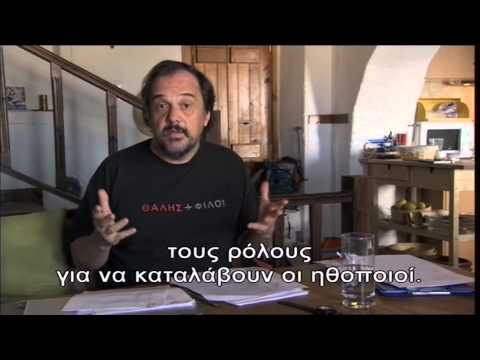
A documentary that was filmed for the most part during the five years of the graphic novel LOGICOMIX, and illustrates the various stages of the work.

Talk at Google.