How many roads must a man walk down
Before you call him a man?
Yes, ’n’ how many seas must a white dove sail
Before she sleeps in the sand?
Yes, ’n’ how many times must the cannonballs fly
Before they’re forever banned?
The answer, my friend, is blowin’ in the wind
The answer is blowin’ in the wind


How many years can a mountain exist
Before it’s washed to the sea?
Yes, ’n’ how many years can some people exist
Before they’re allowed to be free?
Yes, ’n’ how many times can a man turn his head
Pretending he just doesn’t see?
The answer, my friend, is blowin’ in the wind
The answer is blowin’ in the wind


How many times must a man look up
Before he can see the sky?
Yes, ’n’ how many ears must one man have
Before he can hear people cry?
Yes, ’n’ how many deaths will it take till he knows
That too many people have died?
The answer, my friend, is blowin’ in the wind
The answer is blowin’ in the wind
 Click to enlarge (click again to close)
點擊放大(再擊關閉)
Click to enlarge (click again to close)
點擊放大(再擊關閉)
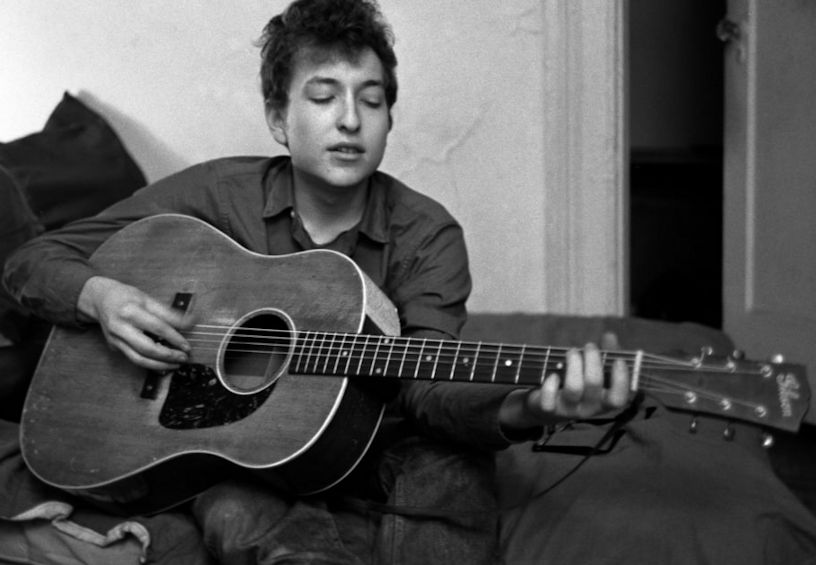
Although it has been described as a protest song, Dylan maintained that he was only writing about his feeling at that time, "I'm only 21 years old and I know that there's been too many wars. You people over 21 are older and smarter."
The theme may have been taken from a passage in Woody Guthrie's autobiography "Bound for Glory" in which Guthrie compared his political sensibility to newspapers blowing in the winds of New York City streets and alleys. Dylan was certainly familiar with Guthrie's work. His reading of it had been a major turning point in his intellectual and political development.
The lyrics poses a series of rhetorical questions about peace, war, and freedom. The refrain "The answer, my friend, is blowin' in the wind" has been described as impenetrably ambiguous: either the answer is so obvious it is right in your face, or the answer is as intangible as the wind.
In June 1962, the song was published in "Sing Out!", accompanied by Dylan's comments:
There ain't too much I can say about this song except that the answer is blowing in the wind ... Too many of these hip people are telling me where the answer is, but I won't believe that. I still say it's in the wind and just like a restless piece of paper it's got to come down somehow. But the only trouble is that no one picks up the answer when it comes down, so not too many people get to see and know. Then it flies away.
"Blowin' in the Wind" has been recorded by hundreds of other artists. The most successful commercial version is by folk music trio Peter, Paul and Mary, who released the song three weeks after Dylan's album.
In 1975, the song was included as poetry in a high-school English textbook in Sri Lanka. The textbook caused controversy because it replaced Shakespeare's work with Dylan's.