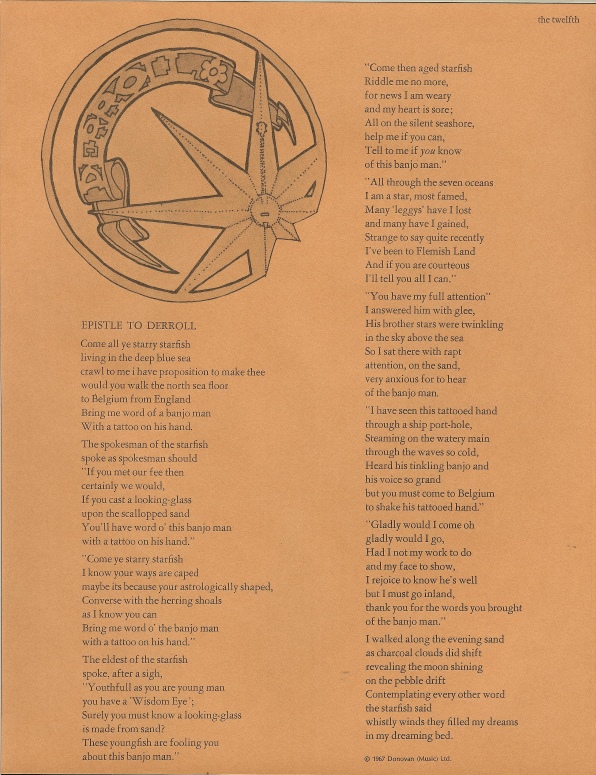
"Come all ye starry starfish
living in the deep blue sea.
Crawl to me I have a
proposition to make thee,
Would you walk the North Sea floor
to Belgium from England?
Bring me word of a banjo man
with a tattoo on his hand."

The spokesman of the starfish
spoke as spokesmen should,
"If'n you met our fee
then certainly we would.
Should you cast a looking-glass
upon the scalloped sand,
You'll have word o' this banjo man
with a tattoo on his hand."

(guitar interlude)

"O'Come ye starry starfish
I know your ways are caped.
Maybe it's because you're
astrologically shaped.
Converse with the herring shoals
as I know you can.
Bring me word o' the banjo man
with a tattoo on his hand."

The eldest of the starfish
spoke, after a sigh,
"Youthful as you are young man
you have a 'Wisdom Eye'.
Surely you must know a looking-glass
is made from sand?
These young fish are fooling you
about your banjo man."

"O'Come then aged starfish
riddle me no more.
For news I am weary
and my heart is sore.
All on the silent seashore
help me if you can,
Tell to me if you know
of my banjo man."

"Now all through the seven oceans
I am a star, most famed.
Many 'leggys' have I lost,
many have I gained.
Strange to say quite recently
I've been to Flemish Land.
And if you are courteous
I'll tell you all I can."

"O'You have my full attention,"
I answered him with glee.
His brother stars were twinkling
in the sky above the sea.
There I sat there with rapt
attention, on the sand.
Very anxious for to hear
of my banjo man.

"I have seen this tattooed hand
through a ship port-hole.
Steaming on the watery main
through the waves so cold.
Heard his tinkling banjo
and his voice so grand.
But you must come to Belgium
to shake his tattooed hand."

"O'Gladly would I come
gladly would I go.
Had I not my work to do
and my face to show.
But I rejoice to hear he's well
but I must go inland.
Thank you for the words you brought
of my banjo man."

I walked along the evening sand
as charcoal clouds did shift.
Revealing the moon shining
on the pebble drift.
Contemplating every other
word the starfish said.
Whistly winds they filled my dreams
in my dreaming bed.
 Click to enlarge (click again to close)
點擊放大(再擊關閉)
Click to enlarge (click again to close)
點擊放大(再擊關閉)
"Epistle to Derroll" is a token of his affection and admiration for Derroll Adams, the "banjo man with a tattoo on his hand".
The song is the final cut from Donovan’s 1967 album "A Gift from a Flower to a Garden". A lovely song about the Banjoman, it is filled with oceanic and cosmic imagery, going from the world of the starfish, to the sand on the beach (from which mirrors can be made), to the stars in the heavens.
The lyrics is a very clever commentary on the responsibilities and vagueries of fame, while at the same time a deeply affectionate tribute to Derroll and the musical tradition, skill, and kind graciousness he was so well known for.
Donovan commented about this song in an interview,
This is rather different that anything I’ve done before, but I’m rather pleased with it. I hope you are too.In 1967 during his concert at the Anaheim Convention Center, Donovan introduced this song whimsically,
This is a story of a conversation I had once, with some starfish by the sea. I walked straight up to a few of them one day, and I said ...Then he began to sing this beautiful song.
《Epistle to Derroll》象徵他對 Derroll Adams 的喜愛和崇拜,即「手有紋花的班卓琴家」(banjo man with a tattoo on his hand)。
歌曲登錄在 Donovan 的1967年專輯《A Gift from a Flower to a Garden》,排行最後。這一首關於 Banjoman 的歌曲,風趣可愛,充滿海洋和星際想象。從海星的世界,到海灘上的沙粒(可製作鏡子),仰望天上的繁星。
歌詞非常巧妙的評論名聲,有責任承擔,亦變幻無常。歌曲也為 Derroll 送上深情致敬,其音樂以傳統、技巧和優雅,為人讚賞。
Donovan 在接受采訪時,評價這首歌:
此曲有別於以往創作的任何一首,但我十分滿意,希望你有同感。1967年,在 Anaheim 會議中心舉行的音樂會上,Donovan 介紹這首歌,異想天開:
這是一個故事。某天,我和海邊的海星談話。徑直走往星星中間,我傾訴 ...然後緩緩唱出,這首優美的歌曲。
 Click to enlarge (click again to close)
點擊放大(再擊關閉)
Click to enlarge (click again to close)
點擊放大(再擊關閉)
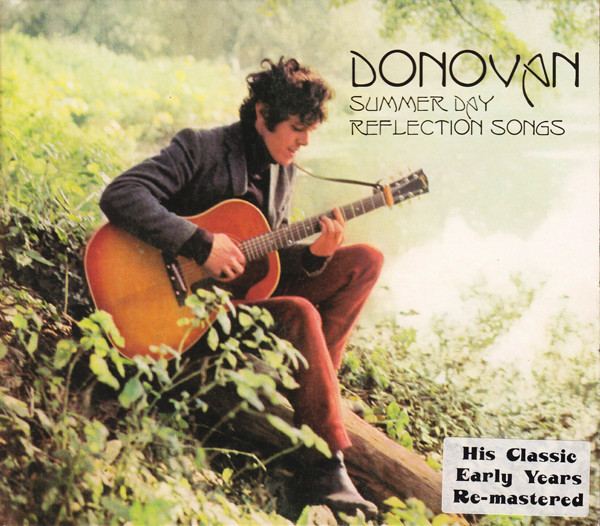
When Donovan was ten his family moved south to England, resettling in Hatfield. Before starting college in his teens, the young man had run away from home more than once. During one outing at fourteen, he found an old guitar in a trash can, still good enough to learn the basics on.
In the mid-to-late 1960s, Donovan attained worldwide fame as an icon of the burgeoning "flower power" movement, chiefly through his songs espousing the virtues of love and altruism. He was best known for his simple, acoustic balladry on the guitar. Though a self-professed contemporary bard in the classic sense of the term, Donovan was, and remains, a hugely eclectic artist.
Donovan is widely regarded as one of the most influential songwriters and recording artists working today. During an interview in 1997, he reflected on himself,
The most important of my achievements, if you want to call them that, was that I successfully introduced mystical ideas into pop culture, which was my obsession and my compulsion when I was 16 years old. So, behind all of this fame and fortune, there was a seeker, on a spiritual path — a young man who wanted to discover and share with others an alternative way of looking at the world. I wanted to save our culture from the stupidity and the bigotry and the ignorance that threatened it.
Donovan 十歲時,家人南遷,來到英格蘭,在 Hatfield 重新定居。年輕人應該上中學,但他多次離家出走。十四歲時一次郊遊,在垃圾桶裡發現一把舊結他,但仍可以彈,他開始學習基礎知識。
在1960年代中後期,Donovan 成為新興「花的力量」(flower power)運動的偶像,享譽全球。他以簡單原聲結他民謠而聞名,歌曲宣揚美德,擁護大愛和無私。Donovan 自稱是經典意義上的當代吟遊詩人。儘管如此,他仍然是一位不拘一格的藝術家。
當今最有影響力的詞曲作者和音樂藝術家,Donovan 被公認是其中之一。在1997年的一次採訪中,他反思:
我的「成就」(如果硬要這樣稱呼)中最重要的,是成功把神秘思想,引入流行文化,正是我16歲的痴迷和慾望。所以,一切名利背後,在精神道路上有一個追求者:一個年輕人,想要發現並與他人分享,另一種世界觀。我想把我們的文化,從威脅它的愚蠢、偏執和無知中,拯救出來。
 Click to enlarge (click again to close)
點擊放大(再擊關閉)
Click to enlarge (click again to close)
點擊放大(再擊關閉)
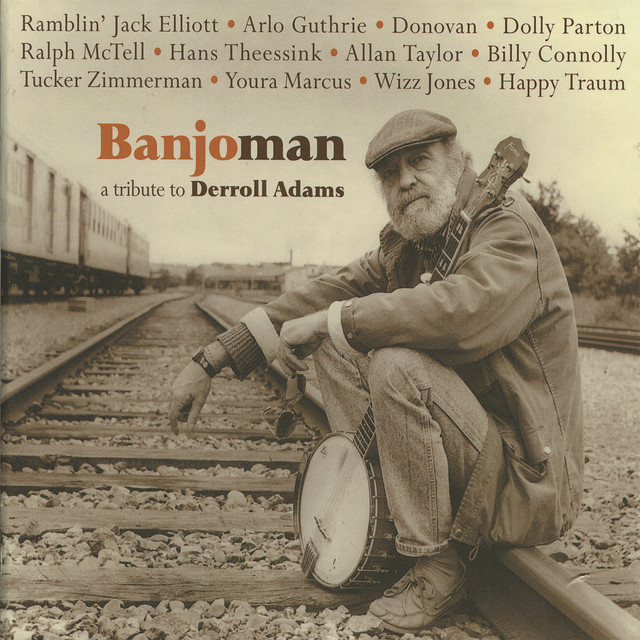
In 1964 when Donovan was in St. Albans in England, he would go down to London to see Derroll Adams performing in clubs. To Donovan, he was a direct link to the American folk revivial. In Donovan’s autobiography he went on to say,
I wanted to know Derroll, and when we met we liked each other fine. In fact we became friends. I learned so much from Derroll even though he played banjo and I played guitar. I would sit cross-legged on hotel carpets or in the tiled bathrooms (for the echo) and watch the master. He played in a delicate ‘frailing’ fashion, brushing the strings very gently and singing soothingly in his low sonorous voice. He touched each string with such tenderness, then seemed to pause to marvel at the sound that his banjo produced. I fell into altered states, following the one note fading. I was being taught by a master, instructed with no instruction. Awakened to the knowledge with no awakening. Amazed by his own plucking of one string, he would stop, turn to me, and say, ‘Donny ... will ya listen to that, isn’t it beautiful?’ And it was.For Donovan, Derroll Adams was a true master. He dedicated his most colourful and enchanting song to him.
1964年,Donovan 在英格蘭的 St. Albans,曾往倫敦看 Derroll Adams 在各俱樂部表演。Donovan 認為,他是美國民謠復興的直接連繫。在 Donovan 的自傳中,他接著說:
我想結識 Derroll,一見面就很喜歡對方。事實上,我們結成知已。儘管他彈班卓琴,我彈結他,從 Derroll 那裡,我學到不少東西。 在旅館的地毯上或瓷磚浴室裡(為了迴聲),我會盤膝而坐,望著大師。他以一種精緻的、似「虛弱」的方式演奏,輕輕撫摸著琴弦,用他低沉洪亮的嗓音,舒緩地歌唱。他是如此溫柔地觸摸著每一根弦,然後似驟然停下,讚嘆班卓琴發出的聲音。 隨著音符消失,我陷入異境。大師正在教導我,沒有指示的指示,陶醉中醒悟知識。對自己彈奏每一根弦,他感到驚訝,會稍頓對我說:「唐尼 ... 你聽聽,是不是很美妙?」的確如是。在 Donovan 心目中,Derroll Adams 是真正大師。他把自己最絢麗動人的歌曲,奉獻給他。