Your smartphone or tablet or laptop, which is a necessity of your daily life, is actually a computer.
Computing is doing math. How does your smartphone use math to do all the wonderful things?
If you would like to know the marvellous ideas behind, the following is quite interesting.
日常生活中,你使用的智能手機、平板電腦或筆記本電腦,實際上是一台計算機器。
計算就是數學運算。試想想:你的智能手機,是如何運用數學,來完成所有奇妙的工作?
如果你想了解一下背後的精彩理念,以下內容非常有趣。
Click to enlarge (click again to close)
點擊放大(再擊關閉)
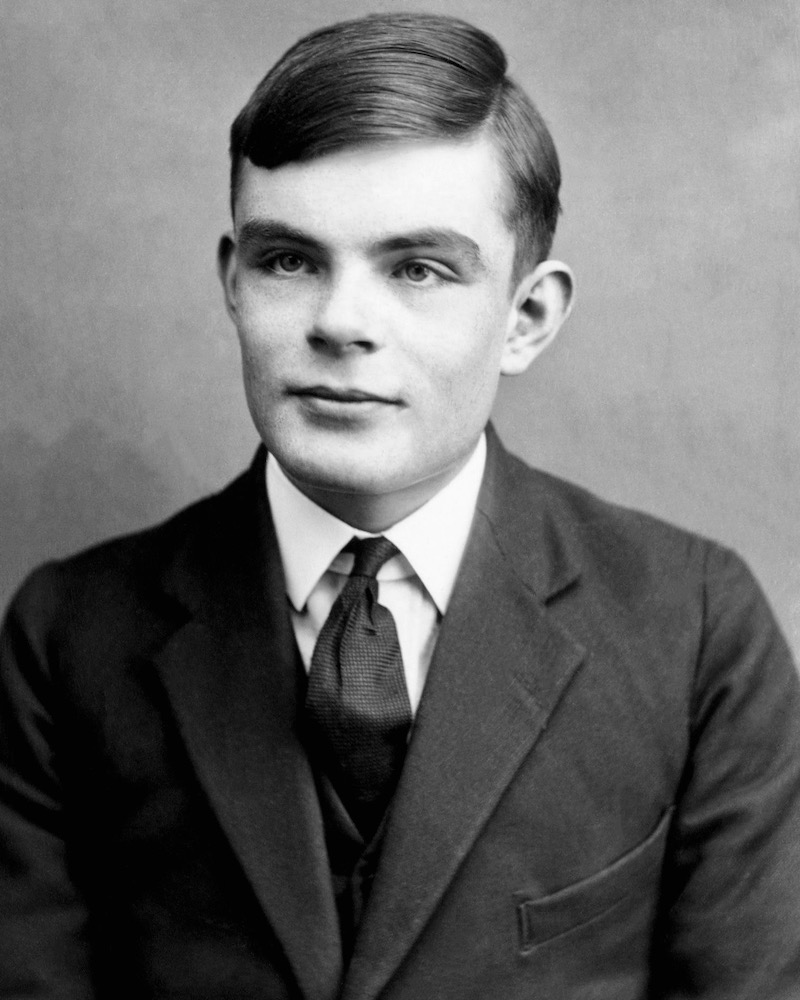
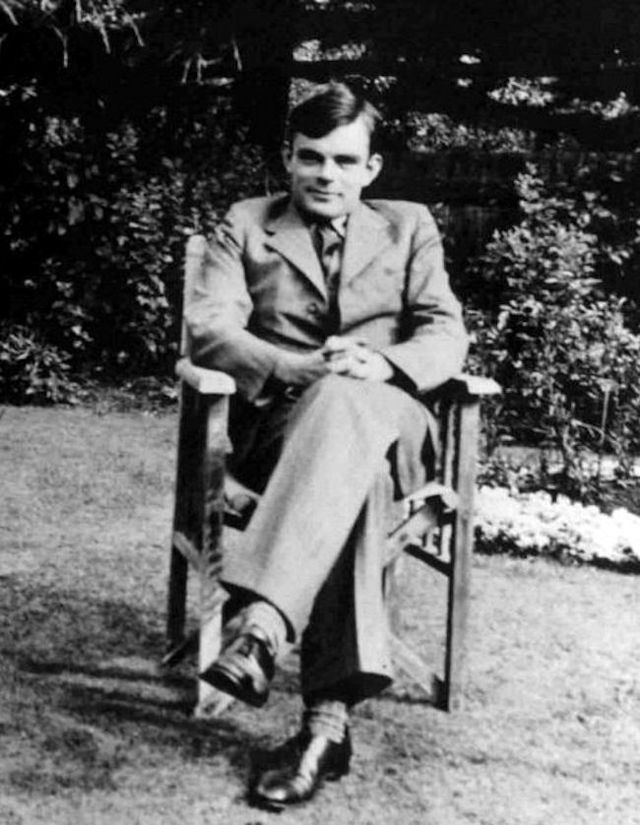
The basic principle of our digital revolution can be traced to a single idea by Alan Turing (1912 - 1954):
All digital information can be computed by a universal machine.
Understanding all these is quite demanding, so we shall sit back and admire, by looking at:
What is digital information?
What is machine computation?
What is a universal machine?
Today, his "universal machine" is called a general-purpose computer, or simply a computer.
In the answers to all these questions, the essence is simulation, or "a game of imitation".
Alan Turing played this imitation game: in his math, his work and his life, until the end.
現代數碼革命,其基本原理可以追溯到 Alan Turing(艾倫·圖靈,1912 - 1954)的獨特創見:
所有數碼訊息,都可以利用「萬能機」來作計算。
理解其中所有詳情,要求很高,讓我們安坐下來,仔細欣賞,查看以下內容:
什麼是數碼訊息?
什麼是機器計算?
什麼是萬能機器?
現在,他的「萬能機」,稱為通用計算機,簡稱計算機,又稱電腦。
關於所有這些問題,答案的本質正是模擬,或「模仿遊戲」。
Alan Turing 一生演繹這個模仿遊戲,在他的數學中、工作中及生活中,直到最後。
Digital Information: imitate by numbers數碼訊息:數字模擬
Information is used in communication, and we communicate by symbols.
During a text chat, if something is funny, we send :-) or 😀. To send a melody, we could use notes: ♪、♫、♬.
Therefore, information consists of symbols【A1】.
Given a list of symbols, you can mark the first as 1, second as 2, third as 3, etc. To send the symbols, you can just send the numbers. Of course, you and your friend must use the same list of symbols to communicate.
This is called a coding system, and the symbol list is the codebook. The codebook makes it possible to encode (from symbol to number) and decode (from number to symbol). Cryptography, the study of secret writing, is about how to keep the codebook a secret so that, hopefully, others cannot decode【A2】.
Therefore, information consists of symbols, imitated by numbers: digital information【A3】!
Alan Turing was a mathematician. He was thinking about math information.
Math information consists of math symbols: $\forall x \exists y, x^{2} + y^{2} = 1$.
Open any math textbook, and the symbols will scare you off!
Math symbols form math sentences, called statements. A math statement is judged by logic: is it true? is it false?
A math topic starts with a small number of simple statements that are assumed to be true, called axioms. Mathematician are the crazy people coming up with crazy statements.
For each statement, their job is to find a proof, to decide if the statement is true or false.
A proof is a logical chain from axioms to the statement. Is there a general method to find the proof?
David Hilbert, a math leader at the turn of 20th century, called this Entscheidungsproblem, a German word meaning 'Decision Problem'. He envisioned that a math proof can always be found, perhaps by trying all possible logical combinations of math symbols.
Hilbert was treating the whole math like a game of chess. A math statement is like a chess puzzle.
By considering all possible first moves, each possible second moves, each possible third moves, etc., you can decide if a chess puzzle will end in a win or a loss (counting forcing a draw as a win).
Of course, this is impractical, but crazy math people are interested in theoretical issues.
In theory, even if one can try all math symbols for logical combinations, will a proof be found?
Hilbert hoped that the answer is yes, but he cannot prove this.
In a popular math conference, he challenged all mathematicians to solve the Decision Problem.
He believed that a proof can be found for any math statement in theory, for otherwise we'll never know if the statement is true or false. "We must know. We will know!", he concluded the lecture.
Alan Turing took up the challenge head-on.
Alan Turing 是一位數學家。他想及的訊息,是數學訊息。
數學訊息,由數學符號組成:$\forall x \exists y, x^{2} + y^{2} = 1$。翻開任何數學課本,其中符號恐怕會嚇跑你!
數學符號,組成的數學句子,稱為陳述。數學陳述,由邏輯作判斷:是對還是錯?
Because symbols are imitated by numbers, symbolic computation is imitated by numerical computation.
Confused? Well, contemplate this and be surprised: number crunching and symbol handling are two sides of the same coin!
To explore this idea, Alan Turing was going to build a machine to compute with symbols.
由於符號由數字模擬,因此符號運算,可以由數字計算模擬。
摸不著頭腦?不由你不信,不由你不服:數字運算與符號處理,其實是兩面一體!
循這個想法探討,Alan Turing 想像構建一台機器,進行符號運算。
Click to enlarge (click again to close)
點擊放大(再擊關閉)
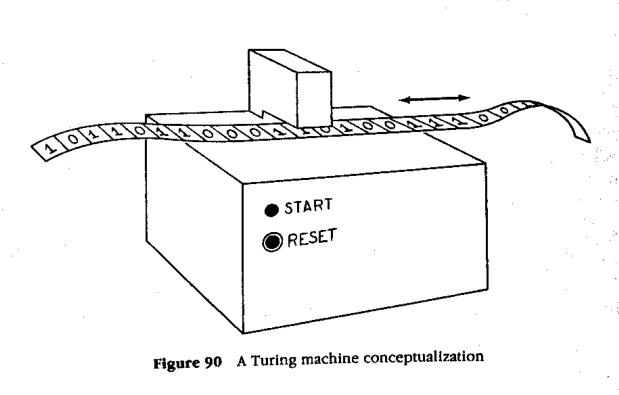
His machine, now called a Turing machine, is a math machine: it works in theory, in the world of abstract math.
The parts of a Turing machine are very simple:
imagine a line of squares, infinitely long, each can be marked with a symbol,
imagine something that can start from a square: read a symbol, then write a symbol, and move to a nearby square.
The 'line of squares' is called a tape, and the read/write 'something' is called the head.
The head takes focus at one square, then steps to either left or right square for next move.
To show how his machine can compute, Alan gave the first example.
他的機器,現稱「圖靈機」,是一台數學機器:在抽象的數學世界中存在,在數學理論上運作。
圖靈機的組件,非常簡單:
想像一排方格,無限延長的,每方格上可標記符號,
想像一枚東西,能夠從一格開始,讀符號,寫符號,然後移到鄰格。
一排方格稱為格帶,讀、寫東西稱為讀寫頭。讀寫頭集中注意一格,然後移至左格或右格,以進行下一步。
Alan 給出首個例子,展示他的機器,如何運算。
Given a blank tape, compute 1/3.
You know the answer is 0.3333... (three's without ending). Even a child can follow these simple rules to print the answer, starting from any square 【B1】:
You may protest, "OMG! This is cheating, not computing!"
Well, you miss Alan's insight: to 'compute 1/3' is not to 'divide 1 by 3', but to 'get the answer of 1/3'【B2】!
With this one example, he pointed out the fundamental nature of computation:
computing is not about numbers, but symbols.
to compute a symbolic answer, just follow a set of rules.
any set of rules that can give the correct answer is acceptable.
The given example mentions 'a child can follow the rules'. In fact the child is irrelevant: she simply acts as the read/write head of a Turing machine.
The rules have start, tik and tok: these are called states of the machine, like a child's states of mind. The states and rules define the whole computation【B3】.
Today, the collection of states and rules is called a program.
You may protest again, "LOL! The program only works for 1/3. Try applying that to compute 1/4!"
You can almost expect Alan's response, "To compute 1/4, just devise another program."
Indeed, if you still remember the steps to perform long division, you can devise a program to compute $1/n$ for any $n \ne 0$: just invent a lot of states, and use a lot of rules.
Alan formulated his computing machine using math, so he could analyse its capability by math, using logic.
His found that: a Turing machine can compute anything, as long as a method is specified.
In other words, any symbolic computation can be imitated by a Turing machine.
Recall that all information is symbolic, so a Turing machine can process any information. That's fantastic!
A Turing machine is so simple that even a mindless child (or a robot) can easily follow the steps of the program.
So you need a Turing machine (or a child to follow a program) to compute $m + n$ for any $m, n$.
You need another Turing machine (another child to follow another program) to compute $m \times n$ for any $m, n$.
You need still another Turing machine (another child following another program) to do a different problem.
That's a lot of Turing machines (or children)【C1】for various computations!
Well, this is math, they only exist in the crazy math world.
Perhaps you'll suggest, "How about teaching a child to learn how to read a program, then act accordingly?"
This is exactly what Alan was thinking!
Each Turing machine corresponds to a program, a set of states and rules.
The program is just math information. We can encode the whole program as a very big number — remember digital information?
This is the most brilliant idea of Alan Turing:
Imagine a Turing machine $M$ that takes input $x$, gives output $y$.
The program of $M$ can be encoded as a number, say $\alpha$.
Now construct another Turing machine $U$ that takes input $\alpha, x$.
The program of $U$ will decode the number $\alpha$, figure out the program of $M$.
Then machine $U$ can imitate the machine $M$, read input $x$, gives the same output $y$!
The special Turing machine $U$ is known as a Universal machine.
Running a Turing machine $M$ is like asking a mindless child to follow its program strictly.
Running the Universal machine $U$ is like teaching the child to interpret the program, and imitate its action faithfully【C2】.
或者你會問:「為什麼不教識孩子如何閱讀程式,然後採取相應的行動?」
正是 Alan 所想!每個圖靈機對應一套程式、一組狀態和規則。該程式只是數學訊息,可以將整個程式編碼,為非常巨大數字 — 記得數碼訊息嗎?
Thus Alan Turing discovered that a single Universal machine can simulate any Turing machine.
The program of the Universal machine is called an interpreter for other programs.
In other words, any symbolic computation can be imitated by a Universal machine.
Today, we know that a Turing machine is a special-purpose computer, running a fixed program for a specific problem.
On the other hand, a Universal machine is a general-purpose computer, running different programs for corresponding problems.
Praise this: a single machine for any symbolic computation. One for all, how nice!👍
因此 Alan Turing 發現,一台萬能機,足以模擬任何圖靈機。萬能機的程式,稱為「解釋器」(interpreter),闡釋解碼其他的程式。
As to the all important question for math: given a statement, is there a general method to find its proof from axioms?
This is Hilbert's Decision Problem. Hilbert hinted that the method would be mechanical, and Alan Turing showed that any mechanical method can be done by a Turing machine.
In other words, the 'Decision Problem' is: given the axioms and a statement, will there be a Turing machine to compute its proof?
This would be a mathematician's dream: build such a Turing machine, fix the axioms, input the math statement, then sit back and wait a million years (or longer) for a proof!
If you think this is too good to be true, you're right. Alan Turing showed that there cannot be such a dream machine!
To show this, Alan pulled out a trick. The proof in his paper was quite complicated, but the trick is equivalent to the following.
You see, when a Turing machine computes, it can go on forever. The first example to compute 1/3 uses a Turing machine that never stops. However, if you want an answer 'Yes' or 'No' for a problem, you hope that the machine will stop to deliver the answer.
Let $M$ be any Turing machine. Alan showed that the Universal machine $U$ can examine the program of $M$, and simulate its behaviour.
Alan consider something even better: is there a Halting machine $H$ that can examine the program of $M$, simulate its behaviour, and tell if it stops for some input $x$?
Using logic to analyze this machine $H$, Alan found that its existence leads to a contradiction, so there is no Halting machine $H$!
Back to the 'Decision Problem'. Suppose there is a method that can deliver a math proof for any math statement. If the method is mechanical, it can be codes as the program $P$ of some Turing machine. When given a math statement $m$ as input, $P$ will be able to supply a proof of $m$, showing either $m$ is true, or $m$ is false.
Now, for any Turing machine $M$ with input $x$, it stops when its state = 0.
Because Turing machines are math machines, the sentence "if input is $x$, then $M$ stops" is also a math statement, say $m$. By the nature of $P$, $m$ can be proved. This is precisely a Halting machine $H$, which has already been proved impossible!
Therefore, the 'Decision Problem' goes up in smoke:
there is no mechanical method to find the proof of an arbitrary math statement.
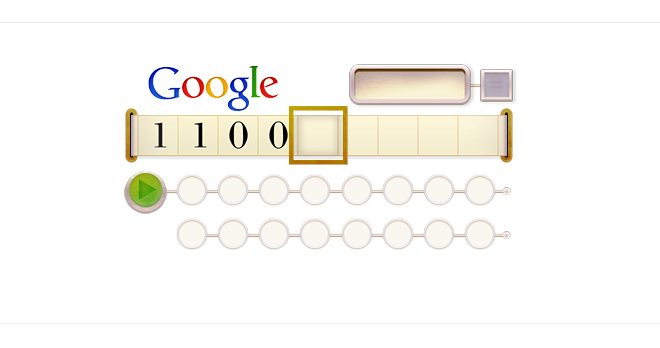
The year 2012 is the centenary of Alan Turing's birth, and he earned a Google interactive Doodle【D1】.
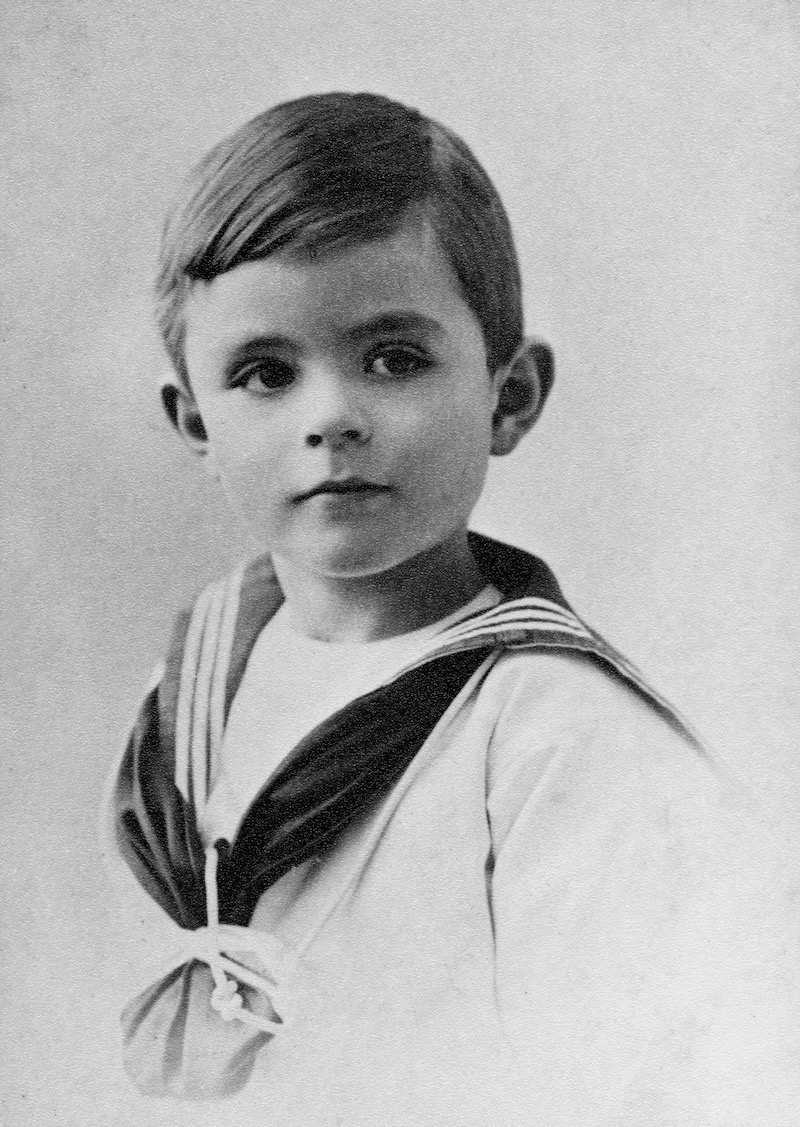
Alan Mathison Turing was born on 23 June 1912. He had an elder brother John, but he was attached to his mother Sara. She would introduce the boy to the outside world, taking him to hiking. She also guided the boy through the inside world, teaching him how to perform long multiplication and long division, step by step.
Little Alan was fascinated by chess, a step-by-step game in a small world with its own rules. He was too young to figure out a good strategy to win the game, but he loved playing both sides, all by himself. Every Christmas, his mother would bought him a new chess set, so he had a collection of chess pieces, all with wonderful shapes.
As a little boy he was inventive, and enriched the vocabulary with new words, e.g., “quockling” for the noise made by seagulls wrangling over some booty; “greasicle” for the guttering of a candle caught in a draught.
In 1922 the nine-year-old Alan was sent to Hazelhurst, a preparatory boarding school.
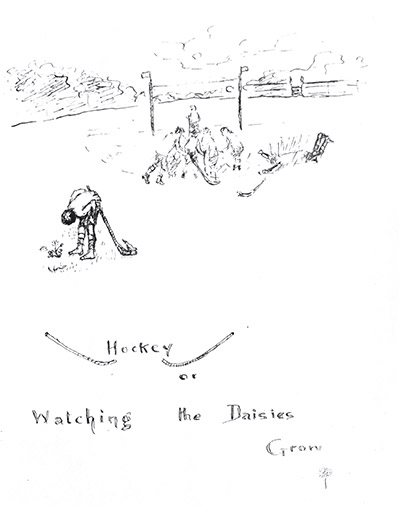
He had an inquisitive mind. During hockey matchs, he was often distracted, walked away to "watch the daisies grow"【D2】.
At Hazelhurst he took up chess and stirred up some interest in the game among his fellows.
At the end of 1922, he got as a gift a book titled "Natural Wonders every Child should Know". This book really opened his eyes to the world of science.
Alan Turing attended Sherborne public school from May 1926 to July 1931.
He was described by his teachers as “a keen and able mathematician,” and, “a very interesting boy to take: he is full of ideas and keenness.”
During the Christmas holidays of 1927, Alan, being then fifteen and a half, wrote for his mom a précis of one of Einstein’s books on Relativity in order to help her to understand the subject.
In 1931, Alan started as a math undergraduate at King's College, Cambridge.
2012年,是 Alan Turing 誕辰一百週年,他取得谷歌互動塗鴉【D1】。
Alan Mathison Turing 生於1912年6月23日,有一名兄長 John,但他依戀母親 Sara。母親向小孩介紹外間世界,帶他遠足;還引導小孩進入內心世界,教他如何一步一步,完成長乘法、長除法。
年幼的 Alan 著迷國際象棋,是有步驟、有策略的遊戲,在小小世界中,有自己的規則。他還年輕,想不出贏棋的妙法,但喜歡單人兩邊打,分析形勢。每年聖誕節,母親都會送他一副新的國際象棋,於是他是象棋收藏家,每套棋子形狀都非常有趣。
Before WWII: imitate math machines二次大戰前:模仿數學機器(show)(顯示)
Click to enlarge (click again to close)
點擊放大(再擊關閉)
Alan Turing is widely regarded as 'the father of computing'. This is because of his introduction of a math model of computation, and his discovery of the Universal Machine.
Turing machines perform computations, they are math machines. The universal machine can interpret the program of any Turing machine, thus imitating a math machine.
Turing machines and the universal machine were described in his 1936 paper On Computable Numbers, with an Application to the Entscheidungsproblem.
This paper laid the foundation of modern computer science.
He was just 24, a math graduate from King’s College of Cambridge University【D3】.
Today, inside every computer (say your smartphone), there is a tiny 'heart', called the CPU (Central Processing Unit).
The CPU is actually a lightning fast universal machine, intepreting something called machine codes. Any task for the computer is a program, called an application, or simply app. The tape of a Turing machine corresponds to computer memory.
Just click to run an app, and the CPU computes: transforming the codes, which are symbols, thus processing information: text, images, audio, video, etc.
During WWII: imitate code machines二次大戰中:模仿代碼機器(show)(顯示)
On September 1, 1939, Hitler invaded Poland, starting Second World War.
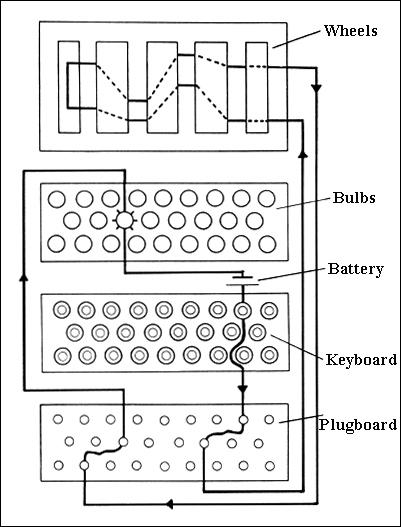
The Germans had been using Enigma machines for encryption and decryption.
The Enigma machine itself is not a secret, anyone could buy one and take it apart.
It looks like a typewriter with display lights: press key 'A', and the display lights up 'H', say, the encrypted letter.
The beauty of the design is its symmetry: if someone has another Enigma machine with identical settings, pressing 'H' will light up 'A', and the letter is decrypted.
The Enigma machine has internal wheels. Their initial settings determine a codebook. The pressing of a key turns the wheels, switching the machine to another codebook. Combined with other features inside the machine, the number of possible combinations is astronomical. This makes breaking the Enigma code by trying them all impractical. The German military even added a plugboard with secret wiring hidden, to ensure that their Enigma machines were unbreakable.
The Polish intelligence were able to break the Enigma code before the war. The work was aided by secret wiring diagrams supplied by French intelligence, and mathematicians who found that the math of symmetry in Enigma design can greatly reduce the number of possible combinations to try.
They built mock-up Enigma called Bomba to imitate the Enigma actions, to work out the most likely initial setting of wheels.
As the war approached, the Germans began swapping plugboards daily. The naive Polish codebreaking effort became ineffective. Before the fall of Poland, they revealed their work to French and British intelligence.
Alan Turing joined the codebreaking team at Bletchley Park at the outbreak of the war.
He had a reputation of being eccentric, but he understood the math of Enigma,
and he knew that a Turing machine can imitate Enigma, thus breaking the code.
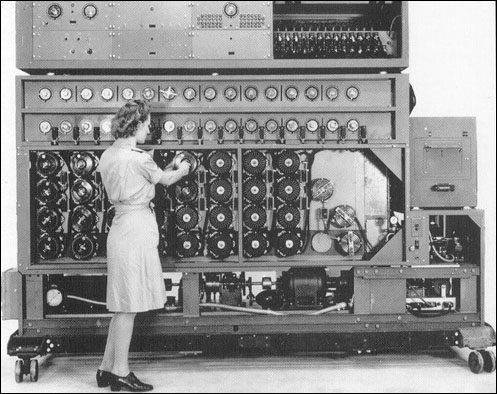
He improved the Polish Bomba to his Bombe, a special-purpose codebreaking machine that only Alan knew how to program to break the Enigma code.
The first such Bombe, nickname Victory, was installed in the spring of 1940.
From mid-1940, German Air Force signals were being read at Bletchley Park.
In 1942, German Navy added extra wheels in their Enigma machines, for use on U-boats against supply ships to Britian.
This prompted Alan to devise new tricks to overcome the difficulty. He figured out how to imitate the modified Enigma. His codebreaking team succeeded when secret materials from a sunken U-boat were sent to Bletchley Park. Their work saved the merchant convoy from U-boat attacks, allowing vital supplies to Britian.
By 1943 Alan's Bombes were cracking two Enigma messages each minute, or a staggering total of 84,000 messages each month【D4】.
For communication between Hilter and his high commanders, Lorenz, a more complex version of Enigma, was employed. By imitating the Lorenz machine, Alan worked out the principle of breaking it, but electro-mechanical machines like the Bombes were too slow. His team began working on a fast machine using electronics. The result was Colossus, the first special-purpose electronic computer【D5】.
However, Alan Turing was not involved in building the Colossus. Instead, he was sent to United States to explain to the American how to build their own Bombes. In November 1942, he was the only civilian on board a British warship to America.
戰爭爆發,Alan Turing 加入 Bletchley Park 的密碼破解團隊。他以怪僻見稱,但他懂得 Enigma 的數學,並且明白圖靈機可以模仿 Enigma,從而破解密碼。他把波蘭的 Bomba 加以改良,成為他的 Bombe。這是一台特殊用途的密碼破解機器,只有 Alan 一人知道,如何通過改編程式,來破解 Enigma 密碼。
1940年春天,團隊安裝第一台 Bombe,暱稱「勝利號」。從1940年中,Bletchley Park 開始讀取德國空軍的訊號。
1942年,德國海軍在他們的 Enigma 機器中,增加額外的轉輪,用於潛艇對抗英國的補給艦。這促使 Alan 設計新的技巧來克服困難。他想出:如何模仿經過修改的 Enigma。當一艘沉沒德國潛艇的秘密材料,被送到 Bletchley Park 時,他的破解團隊取得成功。他們的工作,使商船隊免於受潛艇襲擊,為英國提供重要的補給。
After WWII: imitate intelligence二次大戰後:模仿智能(show)(顯示)
After the war, Alan Turing was keen to build a general-purpose computer — his real-life universal machine.
He joined a team building the ACE (Automatic Computing Engine), and he drafted the design blueprints. Due to bureaucracy, the project kept delaying without an actual machine. In 1948, Alan left and joined another team at the University of Manchester. They eventually produced Mark I.
In early April 1949, Mark I, the first general-purpose computer, successfully ran its first program: searching for prime numbers. It made headline in the British press, described as 'mechanical mind' to the general readers. This provoked strong reactions from neural experts, and sparked public debates on 'thinking machines'.
Alan Turing gave several talks about computer and intelligence, anticipating that a computer may be able to learn by changing its own programs.
戰後,Alan Turing 熱衷於建造一台通用計算機 — 現實生活中的萬能機。
他加入團隊,構建 ACE(Automatic Computing Engine,自動計算引擎),並起草設計藍圖。由於官僚主義,該項目一直拖延,只是紙上談兵。1948年,Alan 轉投曼徹斯特大學的另一團隊。他們最終建成 Mark I。
1949年4月上旬,第一台通用計算機 Mark I,成功運行首個程式:搜尋素數。消息登上英國報刊頭條,為迎合大眾,它被稱為「機械頭腦」。這一來,引起神經科專家的激烈反應,並掀起關於「思想機器」的公開辯論。
Alan Turing 曾多次發表演講,討論關於計算機與智能。他預計:計算機可以通過修正自己的程式,進行學習。
Click to enlarge (click again to close)
點擊放大(再擊關閉)
In 1950, he wrote a paper Computing Machinery and Intelligence, addressing the question, "Can machines think?"
This was the first serious discussion about artificial intelligence (AI).
How to check if a machine can think?
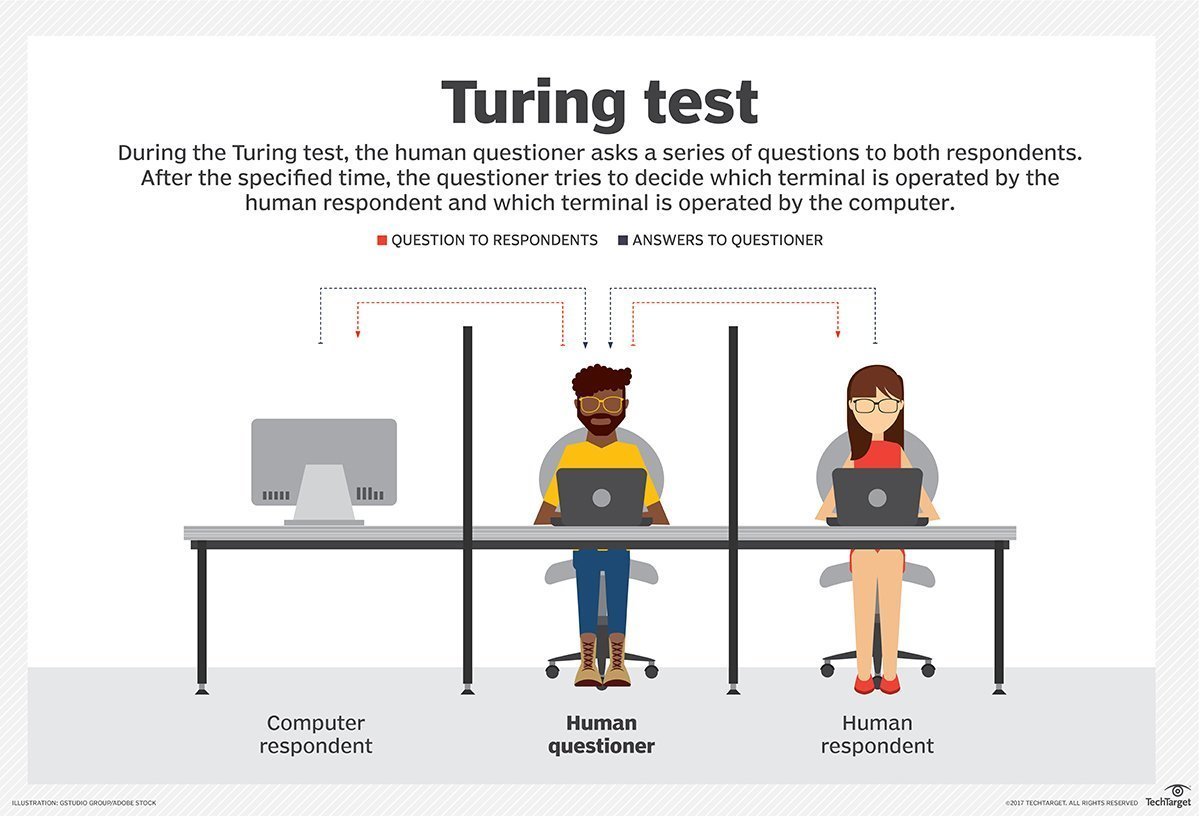
Instead of giving a list of criteria, Alan Turing proposed the Imitation Game:
Have a human and a machine, both hiding from an interrogator.
The interrogator send questions to both via a terminal.
Both the human and the machine respond to the questions.
From the answers, if the interrogator cannot tell which is human and which is machine,
Alan Turing would say that the machine is as intelligent as the human.
This imitation game now called a Turing test.
There are many criticism about this simplistic viewpoint, but Alan was always concerned about the result, not how to arrive at the result. Remember how a Turing machine computes 1/3?
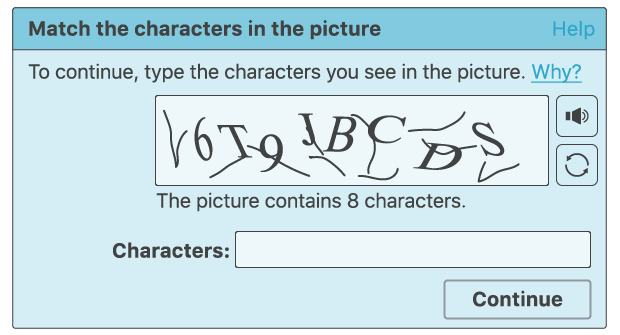
Today, on the World Wide Web, some web pages have online registration. How to check that you're a human when signing up for a new account? An example is to recognize characters against some background (as shown).
If you have been mad proving you are not a robot, you have played a modern Turing test【D6】.
The name of such tricks is CAPTCHA (Completely Automated Public Turing test to tell Computers and Humans Apart) — see, there is indeed 'Turing test' inside!
這個模仿遊戲,現稱「圖靈測試」。由於觀點太簡單,備受批評。但 Alan 只注重結果,不計教如何得出結果。還記得:圖靈機是如何計算 1/3?
現今在萬維網上,有些網頁提供新帳戶註冊。如何檢查是否真人親自登記?有網頁用上識別在背景下的文字(如圖示)。若你曾因為要證明自己不是機器人而煩惱,那你就曾玩過:現代版本的圖靈測試【D6】。此技巧的名稱是 CAPTCHA(Completely Automated Public Turing test to tell Computers and Humans Apart,直譯:全自動公開圖靈測試,以辨別電腦與人腦)— 請看,內裡真的有「圖靈測試」!
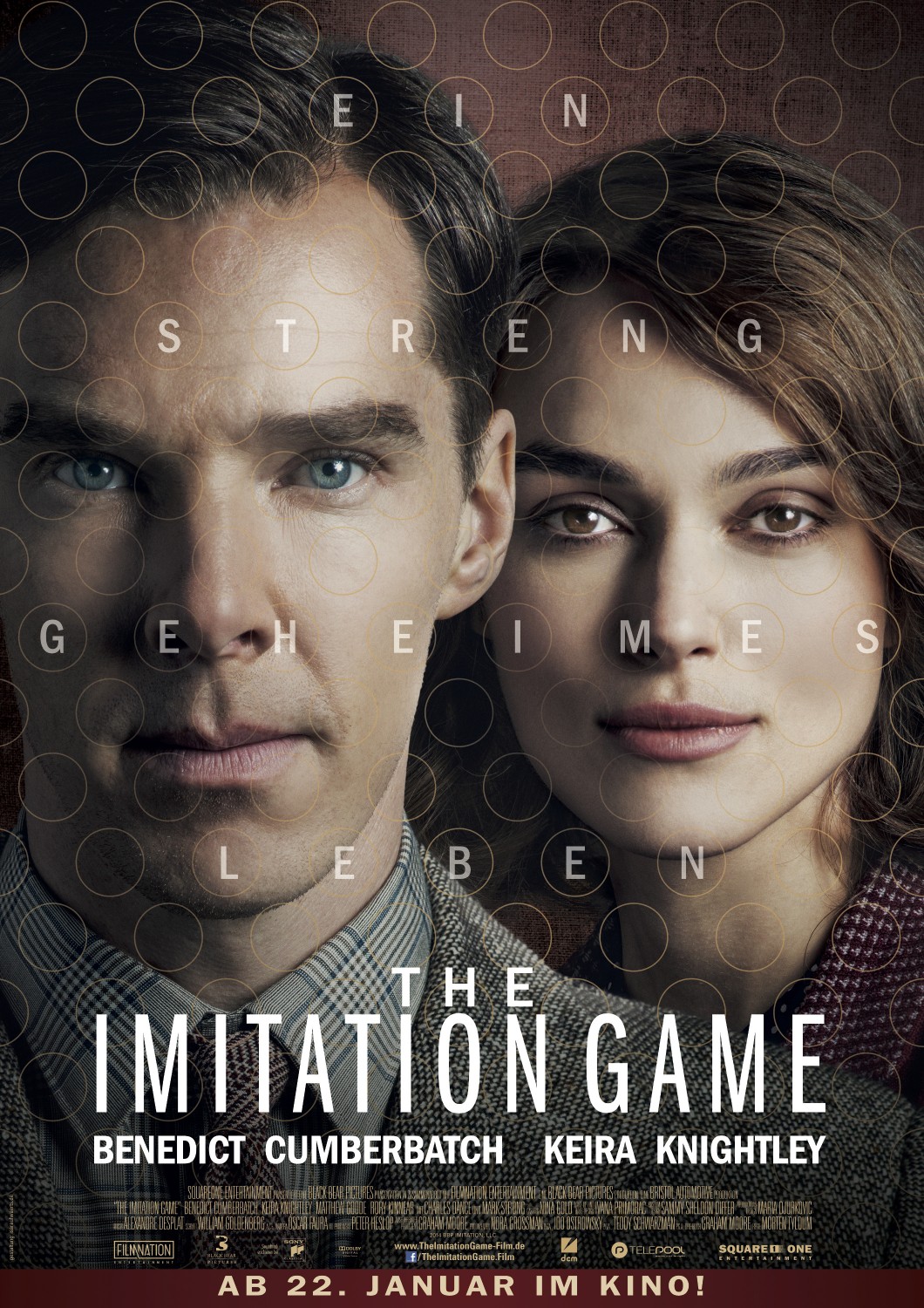
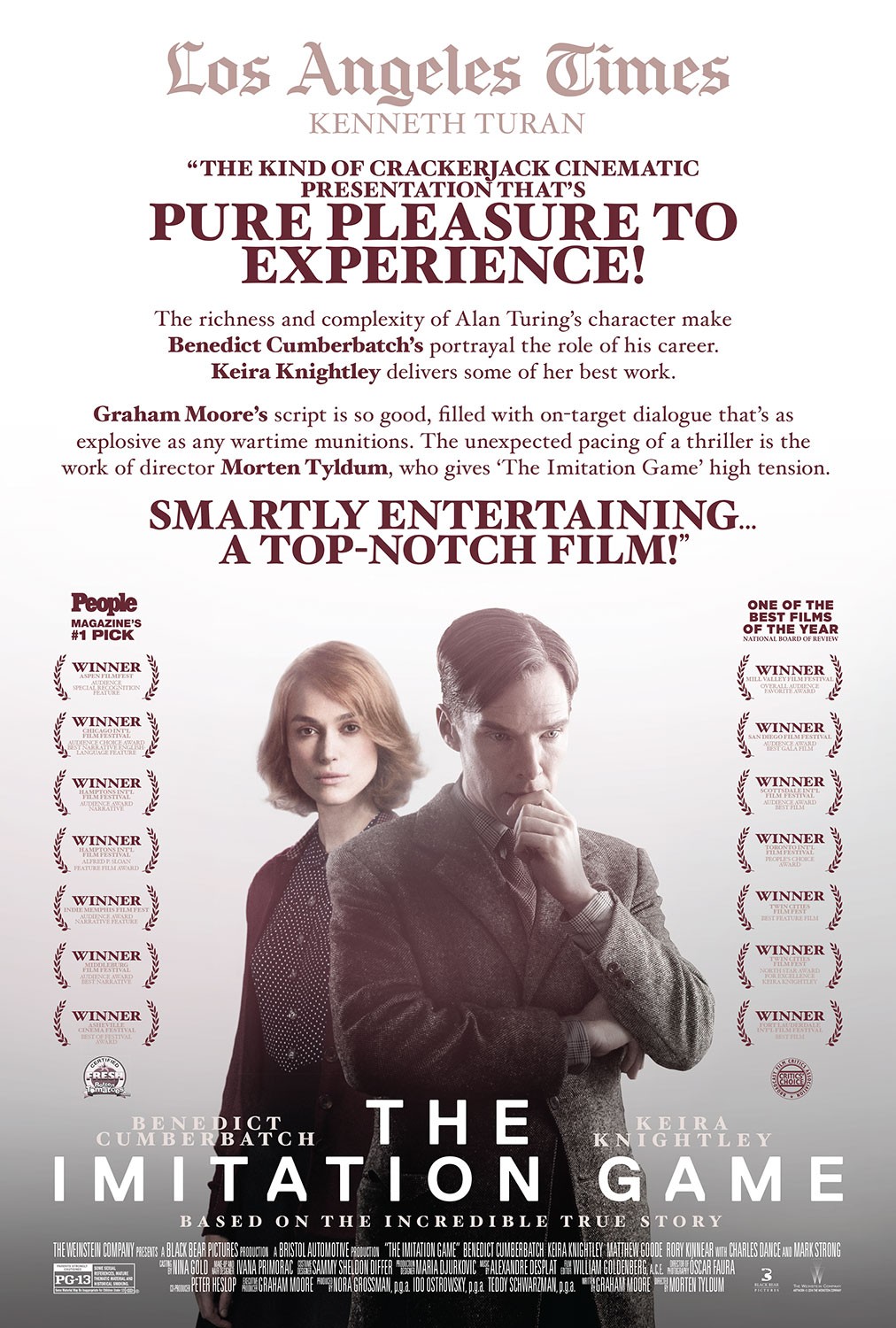
The Imitation Game (2014)The Imitation Game《模仿遊戲》(2014)
Click to enlarge (click again to close)
點擊放大(再擊關閉)
Download【M1】
This is a 2014 British-American historical drama about the British mathematician, logician, cryptanalyst and pioneering computer scientist Alan Turing.
The story in the movie altered some historical facts to streamline the drama【E1】【E2】.
In 1952, Alan Turing returned home to find that burglars had broken into his house. When detectives dug into the matter, they found that the thief was Alan's homosexual mate. Being a crime at that time, Alan admitted homosexuality and agreed to have hormone treatment instead of going to jail.
The main storyline for the movie was a fabricated dialogue between Alan and a detective:
01:06:44, Detective: Can machines think?
01:08:32, Alan: The Imitation Game, ..., would you like to play?
01:08:59, Alan: The judge asks questions, [to find out if the subject is a man or a machine]
01:09:11, Alan: All you have to do is ask me a question.
01:09:26, Detective: What did you really do during the war?
01:09:32, Alan: Are you paying attention?
00:01:38, Alan: Are you paying attention?
Note the use of reverse chronology. The movie skilfully put Alan Turing narrating his own life story, as part of an Imitation Game. Finally:
01:38:40, Alan: Now, Detective, you get to judge.
01:39:00, Alan: Am I a war hero? Am I a criminal?
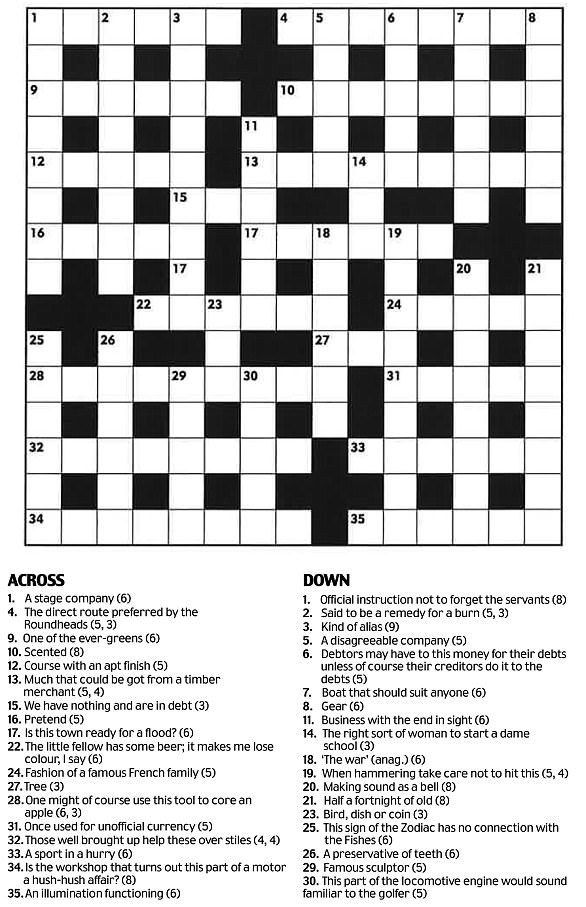
In the movie, Alan Turing's schooldays were inserted when he fired two codebreakers immediately after his funding for a computer was granted. Subsequently, he posed a newspaper crossword puzzle to recruit new codebreakers. Some facts have been distorted.
Alan Turing studied in Sherborne School at Dorset from the age of 13. In 1928 he met Christopher Morcom, his fellow classmate who died in 1930 due to an illness. The death devastated Alan emotionally, but ignited his willpower.
The War Office, rather than Alan, posed newspaper puzzles to recruite potential codebreakers.
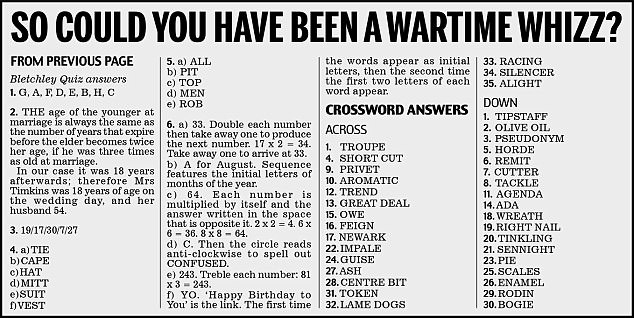
On 13 January 13 1942, the Daily Telegraph printed a series of puzzles, including a crossword (shown on the right), for a total time limit of 12 minutes【E3】.
Alan did not design the code-breaking machine, nor name the machine 'Christopher'.
He redesigned the Polish Bomba, although his contributions were original.
Alan worked closely with his team, building six of these machines, for a group effort to break the Enigma code.
Funding to build these machines was provided from the top. Winston Churchill, then prime minister, visited Bletchley Park in 1941. This encouraged a group of code-breaker, including Alan Turing, who had been frustrated by the lack of resources for their code-breaking work, to write a letter to Churchill. Upon receiving the letter, Churchill wrote a memo to his chief advisor, 'Action this day! Make sure they have all they want on extreme priority and report to me that this has been done.'
Joan Clarke was not recruited from puzzle solving. She had a double first in mathematics at Cambridge, since women were not granted full degree at that time. She was recruited to Bletchley Park by her supervisor in 1939.
Working first as a clerk, she was soon recognized as a brilliant codebreaker.
Alan Turing was working in Hut 8 to crack the German navy code. Soon an extra table was put inside Hut 8 for Joan Clarke.
Alan Turing was homosexual, but he did propose to Joan Clarke, an "imitation game" to appear normal.
In the movie, Joan Clarke is played by Keira Knightley, and Alan Turing is played by Benedict Cumberbatch.
The film was directed by Morten Tyldum and written by Graham Moore. The script included these lines:
Sometimes it's the very people
who no one imagines anything of
who do the things no one can imagine.
--- in the movie "The Imitation Game".
This quote appeared three times in the movie: when young Christopher motivated Alan (00:26:16), later when Alan motivated Joan (00:36:43), and at the end when Joan comforted Alan (01:47:25).
In 1945, Alan Turing was appointed an OBE (Order of the British Empire) by King George VI for his wartime services, but his work in Bletchley Park remained a secret for many years.
In 2013, Queen Elizabeth II granted Alan Turing a posthumous pardon【E4】.
Joan Clarke 並不是從解謎中招募來的。她在劍橋大學,只獲頒數學雙甲學位,因為當時全學位不授予女性。1939年,她的上司引薦她到 Bletchley Park。起初,她是一名文員,但很快被賞識是一位出色的密碼破解員。當時,Alan Turing 在8號小屋工作,致力破解德國海軍密碼。很快,8號小屋添加座位,讓 Joan Clarke 工作。
Alan Turing 是同性戀者,但他確實曾向 Joan Clarke 求婚,扮演正常生活的「模仿遊戲」。影片中,Joan Clarke 由 Keira Knightley 飾演,Alan Turing 由 Benedict Cumberbatch 飾演。這部電影由 Morten Tyldum 執導,Graham Moore 編劇。該劇本包括以下句子:
很多時候,
正是大家不抱期望之人,
作出大家不敢想像之事。
--- 電影《模仿遊戲》。
這精句在電影中,出現三次:童年 Christopher 鼓勵 Alan(00:26:16),後來 Alan 激勵 Joan(00:36:43),最後 Joan 安慰 Alan(01:47:25)。
1946年,因其戰時貢獻,英王喬治六世向 Alan Turing 頒授 OBE(Order of the British Empire,大英帝國勳章)。但他在 Bletchley Park 的工作,多年來一直保密。
2013年,英女王伊麗莎白二世,賜予 Alan Turing 死後赦免【E4】。
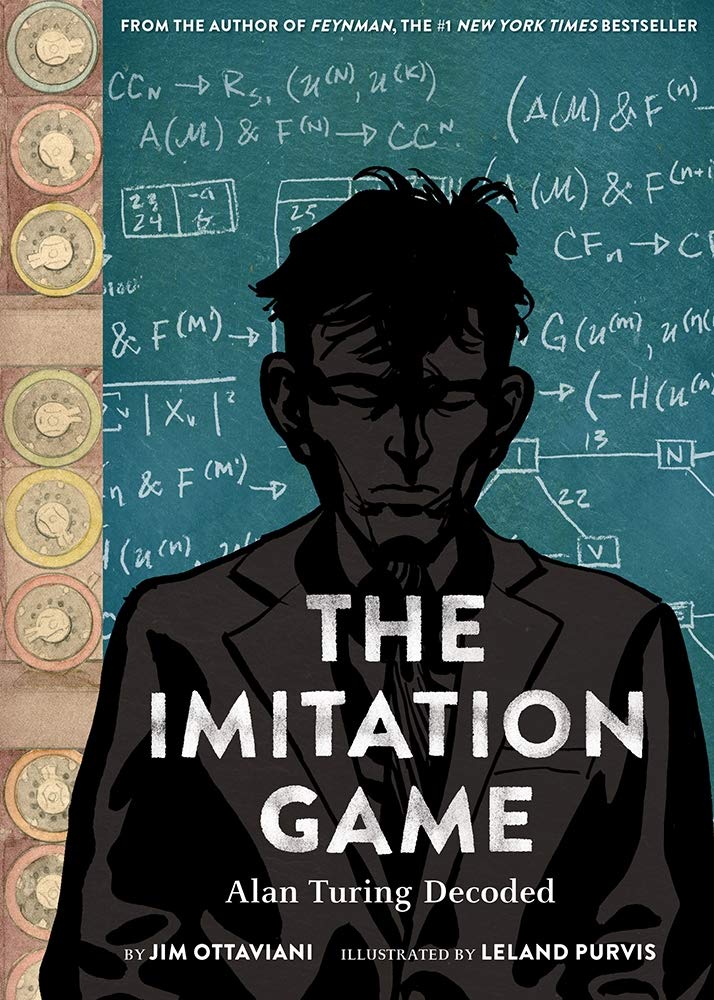
The Imitation Game: Alan Turing Decoded (2016)模仿遊戲:艾倫·圖靈解碼(2016)
Alan Turing's life was depicted in this graphic novel from his school days,
covering his Turing machines, his codebreaking work at Bletchley Park,
his post-war development of the computer, and his ultimate suicide.
All the time, the stories feature his thinking-while-running style.
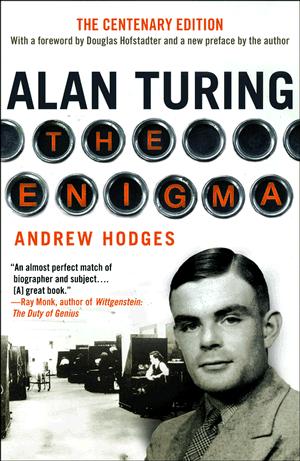
The contents are fairly accurate, based on an autobiography by Andrew Hodges and Douglas Hofstadter, and a little book by Sara Turing, the mother of Alan Turing【F1】.
The narrative goes into quite some details, with 200+ pages.
The more you know about Alan Turing, the more you'll appreciate this graphic novel:
p.43 Alan worked on his machine model of computation.
p.52 Alan solved Hilbert's challenge during a mountain walk.
p.56 Alan went to Princeton, met the famous people there.
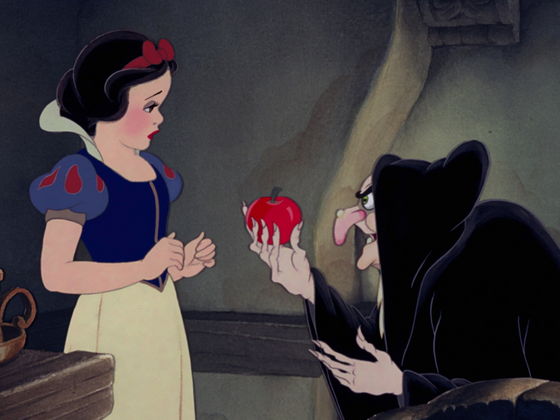
p.63 Alan watched Disney's Snow White in America.
Alan Turing wrote his 1936 paper, invented his computing machine, to solve the Entscheidungsproblem, a German word for 'Decision Problem'. This was a challenge from the German mathematician David Hilbert, who asked for a method, an algorithm, to give a proof of any math statement from axioms.
Just before Alan Turing would like to publish his paper, an American logician Alonzo Church also published a solution to the same problem. Alan's supervisor, Max Newman, found that they took different approaches.
He urged Alan to publish nonetheless, with a note mentioning Alonzo's work. Alan quickly added an appendix, showing that both approaches are equivalent.
Max Newman wrote a letter to Alonzo Church, who worked at Princeton University. He suggested Alonzo to take up Alan Turing as his student. Alan went to Princeton and obtained his PhD under Alonzo in 1938.
Oh yes, it was Alonzo Church, Alan's PhD advisor, who first used the term 'Turing machine'.
這本漫畫小說,描繪 Alan Turing 的生平,從他的學生時代,到他的圖靈機,再到他在 Bletchley Park 的密碼破解工作,戰後對計算機的發展,及他的最終自盡。
無時無刻,故事都彰顯他的風格:邊跑邊想。
內容相當認真,是根據 Andrew Hodges 和 Douglas Hofstadter 著作的自傳改編,以及 Alan Turing 的母親 Sara Turing 寫的一本小書【F1】。
其中敘述有很多細節,共計200多頁。對 Alan Turing 了解越多,就越懂欣賞這本圖畫小說:
第43頁,Alan 不斷推敲,分析他的機器計算模型。
第52頁,Alan 在山間散步,解決 Hilbert 的挑戰。
第56頁,Alan 來到普林斯頓大學,遇見許多著名學者。
第63頁,Alan 在美國觀看迪斯尼卡通電影「白雪公主」。
在1936年發表的論文,Alan Turing 發明他的計算機器,以解決 Entscheidungsproblem,是「判定問題」的德語詞。這項挑戰,來自德國數學家 David Hilbert,要求提供一種方法、一種算法,對任何數學陳述,給予由公理引伸而來的證明。
Alan Turing 正想發表這篇論文之際,美國邏輯學家 Alonzo Church 也解決了相同問題。Alan 的導師 Max Newman 發現,二人採取方法各異。他敦促 Alan 發表文章,附上注釋提及 Alonzo 的貢獻。很快,Alan 在論文添加附錄,表明這兩種方法,是等效的。
Max Newman 寫信給普林斯頓大學的 Alonzo Church,推薦 Alan Turing 為他的學生。Alan 抵達普林斯頓大學,並在 Alonzo 指導下進修,於1938年獲得博士學位。
哦,對的。正是 Alan 的博士導師 Alonzo Church,首先使用「圖靈機」一詞。
Click to enlarge (click again to close)
點擊放大(再擊關閉)
Most likely Alan watched the movie Snow White and the Seven Dwarfs during his time in America.
This was the first Disney full-length animated feature film, released in 1937.
There was a scene in which the wicked witch held an apple in a steaming pot of poison, chanting:
Dip the apple in the brew,
Let the Sleeping Death seep through.
Alan was much impressed by this scene.
He enjoyed reciting these lines.
Perhaps this sowed the seed, decades later, for Alan's ultimate imitation game: to simulate Snow White biting a poisonous apple【F2】.
Making a graphic novel is no easy task. You need to draft the stories, to sequence the development, to polish the dialogues, etc.
Please read the acknowledgement for the names of contributors.
The mp4 files is too big for Google's virus scan, click "Download anyway".
After downloading to your laptop or smartphone,
try open and play (or simply by double clicking).
Most video player can handle mp4 files, and
figure out how to configure your video player to read the subtitle file.
If there are problems, install VLC, a free video player, from App Store or Google Play or Microsoft Store.
Google 會進行病毒掃描,但 mp4 檔案太大,請點擊「仍然下載」。下載到筆記本電腦或智能手機後,嘗試打開和播放(或只是雙擊)。大多數 Video Player 可以處理 MP4 文件,弄清楚如何配置視頻播放器以讀取字幕文件。如果有問題,請從 App Store 或 Google Play 或 Microsoft Store 中安裝 VLC,是免費視頻播放器。
【A1】
English alphabets are symbols, Chinese characters are symbols, Roman numerals I, II, III are symbols, and Arabic numerals 1, 2, 3 are symbols.英文字母是符號,中文漢字是符號,羅馬數字 I、II、III 均為符號,阿拉伯數字 1、2、3 也是符號。
Click to enlarge (click again to close)
點擊放大(再擊關閉)
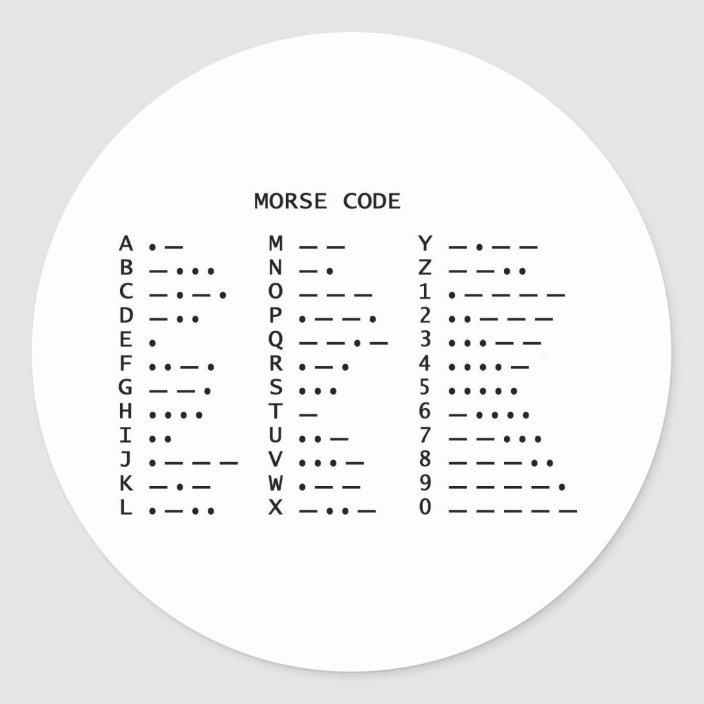
【A2】How Morse Code Works and Still Lives On in the Digital Age by Mark Mancini, April 14, 2021.
In the days of Alan Turing there was no internet, but there was telegraph. Telegraph encodes and decodes alphabets by the Morse code. In 1844, Samuel Morse invented Morse code as a way to communicate via a series of dots and dashes (shown on the right).Alan Turing 的時代,沒有互聯網,但有電報。電報利用 Morse 電碼,對字母進行編碼和解碼。1844年,Samuel Morse 發明摩爾斯電碼(Morse code),通過一系列點號和破折號(如右圖所示),作為一種通訊方式。
【A3】A little diddy about binary file formatsModern information are encoded in binary numbers, with bits 1 or 0, for logic true or false, for electricity on or off. A computer file is just a very long string of 0 and 1, which is a binary number.現代訊息,以二進數編碼,用 1 或 0,代表邏輯對或錯,代表通電或斷電。電腦檔案,其實是很長的 0 和 1 字串,是二進制數目。
【B1】
Actually Alan Turing's example was to compute 1/3 in binary, which is 0.01010101... Similar rules will apply.其實,Alan Turing 的示例,是以二進制形式計算 1/3,即 0.01010101... 類似的規則將適用。
【B2】
What is 7 times 8? You can get the answer by adding 7 eight times, or adding 8 seven times, or simply recall the answer directly from the multiplication table. Who cares? When playing cards, sorting your cards in order can be done in many ways. They are all good, as long as the cards are sorted. 7 乘以 8 是什麼?可以將7相加八次,或將8相加七次,得到答案,或簡單地從乘法表中直接回答。誰會在乎?打橋牌時,對紙牌進行分類排序,可以透過不同方式。只要能夠把紙牌分類排序好,都是可行。
【B3】
In general, a rule has the form:
at (state), if (read symbol) then (write symbol), step (left/right), enter (next state).
See here for another example.一般來說,規則具有以下形式:
在( 狀 態 ), 如 果( 讀 符 號 ) 接 著( 寫 符 號 ),然 後( 左 / 右 )移 一 步 , 進 入( 下 一 個 狀 態 )。
請參見另一個示例。
【C1】50 Things Your Smartphone Replaced, June 12, 2021.
Before the arrival of smartphones, we have pocket calculators for arithmetic, CD players for music, DVD players for video.未有智能手機時,我們計算用袖珍計算機、聽音樂用CD播放器、看視頻用DVD播放器。
【C2】
There is some similarity with a Chinese wisdom: It’s better to teach someone how to fish, rather than providing daily fishes.(授人以魚,不如授之以漁。)有點相似中國的至理名言:「授人以魚,不如授之以漁。」
Click to enlarge (click again to close)
點擊放大(再擊關閉)
【D1】
June 23, 2012: Alan Turing's 100th Birthday✦Compland✦
This is a logic puzzle game in which the player must create a series of programs to print the desired numbers on a Turing Machine tape.
The series of binary numbers are codes for the letters: Google.
To match each letter, you need to create the correct program for the Turing machine, using the buttons along the bottom. You'll need to figure out the programming clues.
I don't have a clue, so I watch the next one.
2012年6月23日 艾倫圖靈 100 週年誕辰✦✦電腦樂園✦✦
這是一款邏輯益智遊戲,目標是為圖靈機創建一系列程式,以在格帶上打印所需的數字。一系列數字,是字母:Google 的二進制代碼。要匹配每個字母,使用底部的按鈕,為圖靈機建立正確程式。你要找出編程線索。我沒有頭緒,所以看下一項。
How to solve the Alan Turing Google Doodle【2:43】
✦✦Compland✦✦
I still don't have a clue (see the one above), but it is fun to watch a Turing machine running!✦電腦樂園✦
我仍然沒有頭緒(參見上一項),不過看着圖靈機運行,挺是有趣!
Click to enlarge (click again to close)
點擊放大(再擊關閉)
【D2】Watching the daisies grow.
This is a sketch of Alan Turing during a hockey match.
In the background, a group of children bunches together in a game of hockey.
Off to the side, young Alan is shown leaning on his stick with his back to what was going on near the far goal and bent double examining a daisy in the grass.
This pen-and-ink caricature was a drawing by Alan Turing’s mother, with caption “Hockey or Watching the Daisies Grow,” There was an annotation by Mrs. Turing, 'sent to Miss Dunwall, matron at Hazelhurst. Date Spring term 1923.'
Curiosity is the catalyst that leads raw talent to a higher purpose. This sketch gives an intimate perspective of the logician in his youth. It also illustrates Alan's fascination with nature and foreshadows his lesser-known foray into theoretical biology.
After Alan's death, Mrs. Turing embarked upon writing a biography of her son, which was eventually published in 1956.
She recounted this story,
This sketch caused much amusement at his school, not least to Alan himself. What was my surprise when matron, Miss Dunwell, returned it to me in 1955, saying, "I had kept it all those years in the belief that one day a biography would be written of Alan."
這張草圖顯示 Alan Turing 在曲棍球比賽中。背景有一群孩子聚在一起打曲棍球,而年輕的 Alan,背向著遠方球門附近發生的事情。他在一旁,靠著他的曲棍杖,彎腰仔細檢查草叢中的一朵雛菊。
Alan Turing 的母親繪製這幅筆墨漫畫,標題《曲棍球或看著雛菊生長》,另加註釋:「給于 Hazelhurst 女舍監 Dunwall 小姐。 日期:1923年春季學期。」
好奇心是催化劑,引導天才達到更高境界。這幅草圖,生動的描繪了年輕時的邏輯學家。又說明 Alan 對自然界的迷戀,並預示他日後嘗試探討理論生物學,鮮為人知。
Alan 去世後,圖靈夫人開始為兒子寫傳記,於1956年出版。她講述這段故事:
在他的學校,這幅素描引起很大的哄動,Alan 本人尤其自豪。1955年,當舍監長 Dunwell 小姐把它歸還給我時,令我非常驚訝。她說:「多年以來,我一直保留著它,因為相信總有一天,會出現一本關於 Alan 的傳記。」
【D3】Alan Mathison Turing (1912-54)King's College archive in University of Cambridge, with many archive photos.劍橋大學國王學院檔案館,有很多檔案照片。
【D4】Alan Turing: The codebreaker who saved 'millions of lives' by Professor Jack Copeland, 19 June 2012.
An account of the work of Alan Turing during his period in Bletchley Park. Jack Copeland is the Director of the Turing Archive for the History of Computing.描述 Alan Turing 在 Bletchley Park 期間的工作。Jack Copeland 是計算歷史圖靈檔案館的負責人。
【D5】How Lorenz was different from EnigmaLorenz had 12 wheels, while Enigma initially had 3 wheels, then increased to 6 wheels.Lorenz 有12個轉輪,而 Enigma 最初有3個轉輪,後來增加到6個轉輪。
【E1】History Hollywood: The Imitation Game (2014)There is a table comparing reel faces and real faces. Include answers to questions about the real Alan Turing, Joan Clarke and other codebreakers in Bletchley Park. Find the video interviewing Joan Clarke at the end.有表格比較各人的劇中和真實面容。問答包括真正在 Bletchley Park 工作的 Alan Turing、Joan Clarke 和其他密碼破解員。末段有 Joan Clarke 的訪問視頻。
【E2】The true story behind The Imitation Game by Frank O'Shea, January 3, 2015.
The subtitle is "it was much more than a Turing circus".
An account of the history of Bletchley Park, Enigma code, and the work of Alan Turing.副標題是「它不僅僅是一次圖靈馬戲表演」。訴說 Bletchley Park 的歷史、Enigma 密碼和 Alan Turing 的工作。
Alan Turing - BBC Horizon Documentary【48:22】cc The Strange Life and Death of Dr. Turing.圖靈博士的離奇生死。
Turing: Pioneer of the Information Age【1:36:39】cc
Jack Copeland discusses Alan Turing's impact on information technology.Jack Copeland 討論 Alan Turing 對訊息科學技術的影響。
Alan Turing - Celebrating the life of a genius【8:14】cc
Saturday 23 June 2012 marks the centenary of the birth of Alan Turing — mathematical genius, hero of the WWII code breakers of Bletchley Park, and father of modern computing.2012年6月23日星期六,是艾倫·圖靈 (Alan Turing) 誕辰一百週年 — 數學天才、二次大戰 Bletchley Park 密碼破解的英雄和現代計算科學之父。
Click to enlarge (click again to close)
點擊放大(再擊關閉)
【E3】Could you have been a Bletchley Park codebreaker? by Sinclair Mckay, 14 October 2017.
This crossword was part of a series of puzzles posted in The Daily Telegraph, 13 January 1942.這個填字遊戲,是1942年1月13日,在《每日電訊報》上發表一系列謎題的一部分。
【E4】Duchess of Cambridge visits Bletchley Park【1:19】
From the Royal Family Channel, 19 June 2014.
The grandmother of Duchess of Cambridge used to work at Bletchley Park just like Alan Turing and his team of codebreakers. See next item.來自皇室頻道,2014年6月19日。劍橋公爵夫人 (Duchess of Cambridge) 的祖母曾經在 Bletchley Park 工作,即 Alan Turing 和他解碼團隊的工作地點。參見下一項。
Kate and the codebreakers by Rebecca English, Stephanie Linning and Harriet Johnston, 14 May 2019.
From Daily Mail, with fashion of Duchess of Cambridge, plus a video.
來自《每日郵報》,展示劍橋公爵夫人 (Duchess of Cambridge) 的時尚打扮,以及一段視頻。
【F1】
The stories in the graphic novel are based on these books:漫畫小說中的故事,取材自以下著作:
Alan Turing: The Enigma (The Centenary Edition)
By Andrew Hodges and Douglas Hofstadter, 2012.
ISBN: 069115564X 【666 pages】
5.69MB
Alan M. Turing (Centenary Edition)
By Sara Turing, 2012.
ISBN: 1107020581 【194 pages】
1.58MB
Alan Turing: The Enigma
This is a website maintained by biographer Andrew Hodges, an electronic extension of his book of the same name.
There are achive sources of Alan Turing's work, and a scrapbook for those interested in Alan Turing.
傳記作者 Andrew Hodges 主持的網站,亦是他同名著作的電子擴展版。有 Alan Turing 工作的重要源材料,以及剪貼簿,與那些對 Alan Turing 感興趣的人分享。
The biography by Alan Turing's mother, Sara Turing, gives details of Alan Turing growing up, with photos from the early days. Sara did not believe that Alan commited suicide. She believed that the apple was contaiminated, and Alan took it by accident.
母親 Sara Turing 撰寫的傳記,詳細介紹 Alan Turing 的成長過程,並附有早期照片。Sara 不相信 Alan 自殺,她認為蘋果受毒污染,Alan 不小心把它吃掉。
Click to enlarge (click again to close)
點擊放大(再擊關閉)
Alan Turing book read aloud by Ella Skye【5:17】cc
This is a children's book from Little People, Big Dreams, 32 pages, published April 7, 2020.
See how to tell the story of Alan Turing without technical words or concepts.
這是《小人物,大夢想》的兒童讀物,共32頁,2020年4月7日出版。請看如何不用專業術語或概念,講述艾倫·圖靈(Alan Turing)的故事。
【F2】Meet Rob Janoff: the man who put the byte in the Apple logo by Imogen Watson, 30 July 2019.
If the image of an apple with a bite reminds you of the Apple logo , you're not the first one to notice the resemblance. However, the logo designer explained that the bite is there for scale — so that a small Apple logo still looks like an apple, not a cherry!
蘋果咬了一口的圖像,若讓你聯想起 Apple 標誌 ,注意到其中相似之處,你並不是第一位。然而,根據標誌設計師的解釋,咬一口只是為了比例 — 因此一個細小的 Apple 標誌,看起來仍像蘋果,而不是小櫻桃!
Unraveling the tale behind the Apple logo by Holden Frith, 7 October, 2011.
The story behind the Apple Logo, the myth, the truth and a wonderful urban legend. Interestingly, the only direction about the Apple Logo that the designer got from Steve Jobs was “Don’t make it cute.” When told about the Alan Turing tale, and asked if that inspired Apple logo, Steve Jobs responded, "It isn't true, but God we wish it were!"Apple 標誌背後的故事、神話、真相和精彩的都市傳說。十分有趣的是,關於蘋果標誌,Steve Jobs 給設計師唯一的指示,是:「不要造得太可愛。」當談到 Alan Turing 的故事,並被問及這是否啟發了蘋果標誌,Steve Jobs 回答:「不是真的,但天啊,我們都希望是真的!」
 Click to enlarge (click again to close)
 Click to enlarge (click again to close)
 Click to enlarge (click again to close)
 Click to enlarge (click again to close)
 Click to enlarge (click again to close)
 Click to enlarge (click again to close)
 Click to enlarge (click again to close)
 Full movie in English, without subtitle. See next item for subtitles.
全高清電影,英語無字幕。若要字幕,請參閱下一項。
Full movie in English, without subtitle. See next item for subtitles.
全高清電影,英語無字幕。若要字幕,請參閱下一項。
 Click to enlarge (click again to close)
 Click to enlarge (click again to close)
 Click to enlarge (click again to close)
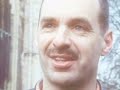 The Strange Life and Death of Dr. Turing.
圖靈博士的離奇生死。
The Strange Life and Death of Dr. Turing.
圖靈博士的離奇生死。
 Click to enlarge (click again to close)
 【666 pages】
5.69MB
【666 pages】
5.69MB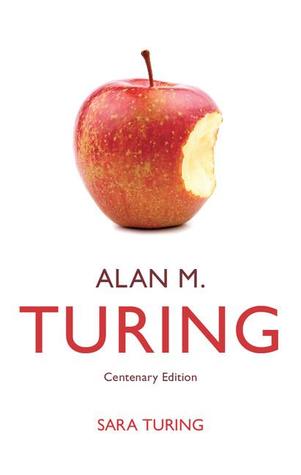 【194 pages】
1.58MB
【194 pages】
1.58MB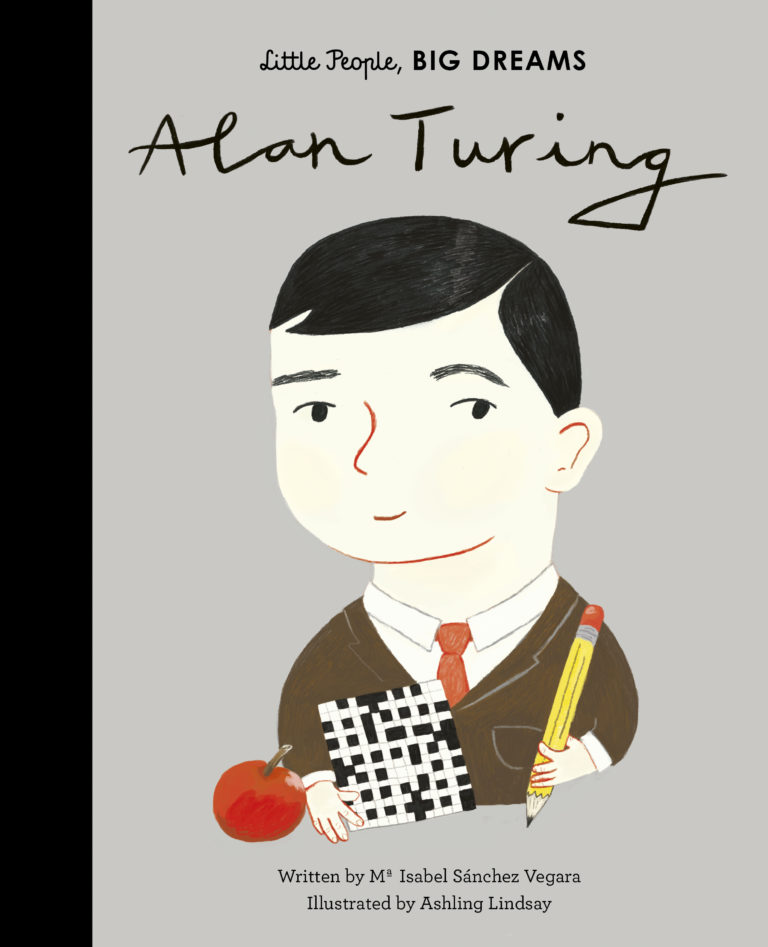 Click to enlarge (click again to close)